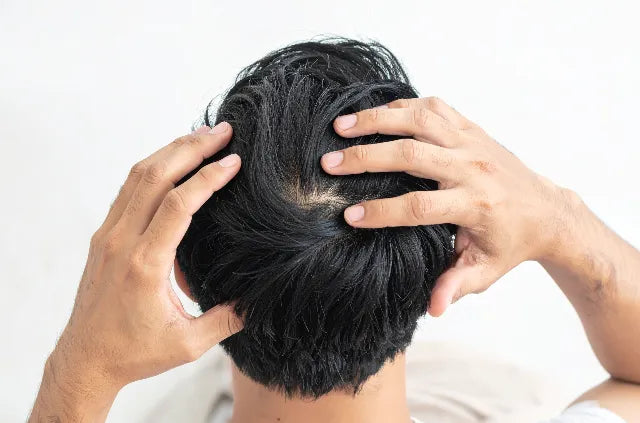
It's a surprisingly common struggle: about 70% of men and 40% of women will experience some form of hair loss in their lifetime. Whether you’re seeing sudden patches or general thinning, figuring out why it's happening is the first step toward getting your confidence—and your hair—back.
Let's break down the different types of hair loss and the most advanced hair restoration methods available today.
What's Causing Your Hair Loss?
Hair loss is not a one-size-fits-all problem. Identifying the root cause is essential for effective treatment.
-
Androgenetic Alopecia (AGA): Known as male or female pattern baldness, it's a multi-factorial condition driven by genetics and hormones. It causes hair follicles to progressively miniaturize, cutting short the hair growth cycle. Recent studies are focusing on a link to scalp microbiome imbalance and micro-inflammation [1].
-
Alopecia Areata (AA): The body's immune system mistakenly attacks hair follicles, leading to sudden, often circular, bald patches. It’s often the result of severe stress, which causes the hair to skip the growth phase and enter the resting phase prematurely.
-
Telogen Effluvium (TE): A temporary but rapid shedding of hair, usually on the top of the scalp, where up to 30% of your hair gets "stuck" in the resting phase (instead of the usual 5-10%). Key triggers include shock, traumatic events, chronic stress, poor diet, pregnancy/childbirth, certain medications, or menopause. Once the trigger is identified and treated, hair should grow back within 3–6 months.
From Conventional to Advanced Hair Restoration
For a long time, the solutions were limited to drugs, surgery, or simply accepting the loss. Today, we have more targeted and sophisticated options.
Traditional Approaches and Topical Serums
Conventional hair loss treatments include prescription topical solutions like minoxidil or oral medications like finasteride. While they can stimulate and maintain hair growth, the catch is you often need to use them continuously for life. Many people are now searching for an effective alternative hair growth serum that avoids these lifelong drug commitments.
Surgical options, like hair transplants, are a form of advanced hair restoration that moves active hair follicles to a balding area. This can be effective, but it’s an expensive undertaking.
Cutting-Edge Methods
The focus of advanced hair restoration is shifting toward noninvasive methods that stimulate the body’s natural regenerative processes:
-
Low-Level Laser Therapy (LLLT): Also called red light therapy, this method uses photons to irradiate scalp tissues, stimulating blood circulation and invigorating hair follicles to grow. While promising, LLLT doesn't work for everyone, can be costly, and long-term safety has not been fully established [2].
-
PRP (Platelet-Rich Plasma): Involves processing a patient’s blood to isolate the platelet-rich plasma, then injecting the concentrated solution into the scalp. It’s a compelling treatment, but doctors still need to standardize the optimal concentration of platelets to maximize the effects of this highly concentrated natural hair growth serum [3].
-
Microneedling / Derma Rolling: This treatment causes micro-injuries in the skin, which triggers healing, boosts blood supply, and encourages new stem cell production to support growth. When combined with a potent topical solution, this can be the delivery system for the best hair growth serum available.
The Foundational Fix: Your Scalp Health
No advanced procedure can succeed if your scalp is unhealthy. The latest science shows that two foundational elements are critical for healthy hair:
1. The Scalp and Gut Microbiome
Technological advances in metagenomics have given us a much deeper understanding of the scalp [4]. Clinical evidence suggests that imbalances in your gut and scalp microflora, known as dysbiosis, are strongly connected to hair loss. This is why choosing scalp microbiome-friendly hair care is critical. A gentle hair serum that supports microbial balance is a proactive step toward maintaining scalp homeostasis.
2. Nutrition and Diet
A simple, yet powerful treatment is a diet rich in hair-supporting vitamins and minerals: Zinc, Iron, Vitamin B12, Vitamins A, C, E, Biotin, Manganese, and Selenium. Plenty of fiber, flaxseed, and fish oils are also vital.
A Targeted Approach: Finding the Best Hair Serum
For many, a modern, topical hair growth serum that harnesses regenerative science offers the best balance of safety and efficacy.
A highly advanced hair serum, like Skinara® Advanced Hair Restoration Growth Serum, is formulated to work with your body's natural biology. The goal is to find the best hair growth serum for your specific needs. Look for solutions that feature ingredients like Stem Cell Growth Factors [5].
What are Stem Cell Growth Factors?
These naturally occurring molecules are essentially signaling proteins that tell your cells how to function. They can be formulated into a concentrated hair growth serum to directly stimulate the active growth phase, improve overall scalp health, and provide an effective treatment without the negative side effects commonly associated with older prescription drugs. Skinara® Hair Growth Serum.
For those who want to use the best hair growth serum at home, topical application is the easiest route. Consistency is key: results often start to show around 3 months, with more noticeable improvements from 6 months onward. If you’re serious about achieving regrowth, finding the best hair growth serum is your starting point.
-
‘Microbial dysbiosis and its diagnostic potential in androgenetic alopecia: insights from multi-kingdom sequencing and machine learning.’ L. Wang, T. Xu, Y. Yu, et al. May 2025. https://pmc.ncbi.nlm.nih.gov/articles/PMC12172500/
-
‘Low-level laser therapy for the treatment of androgenic alopecia: a review.’ E. Darwin, et al. December 2017. https://link.springer.com/article/10.1007/s10103-017-2385-5
-
‘Platelet-rich plasma as a therapy for androgenic alopecia: a systematic review and meta-analysis.’ M. M. S. R. B. H. M. 2019.
-
‘The Potential Relevance of the Microbiome to Hair Physiology and Regeneration: The Emerging Role of Metagenomics.’ N. F. Z. L. C. A. C. February 2021. https://www.ncbi.nlm.nih.gov/pmc/articles/PMC7996884/
-
‘Advances in Stem Cell-Based Therapy for Hair Loss.’ Andjela Egger et al. September 2020. https://pmc.ncbi.nlm.nih.gov/articles/PMC7508456




Share:
Hair food – Great Food for Great Hair
Want Longer Lashes & Fuller Brows? Prostaglandin-Free Eyelash Serum