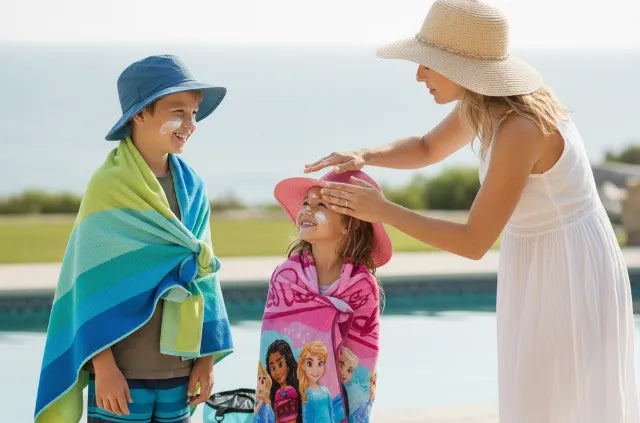
Why Reapplication is Non-Negotiable
Sunscreen isn’t a one-and-done product. Even the best formulas break down over time due to sweat, oil, swimming, or UV exposure. Experts recommend reapplying every 2 hours when outdoors and immediately after swimming or heavy sweating. Indoors, reapplication is still important, especially if you sit near windows where UVA rays penetrate glass.
“To remain protected when outdoors, reapply sunscreen every two hours and immediately after swimming or sweating. People who get sunburned usually didn't reapply, used too little sunscreen, or used an expired sunscreen.” [1] American Academy of Dermatology
Sun Damage Accumulates
Sun damage in childhood is bioaccumulative, meaning every burn, tan, or unprotected exposure adds up and permanently increases lifetime skin aging and skin cancer risk.
- Children’s skin is thinner, more vulnerable, and less able to repair UV damage, making high‑UVA protection essential from the earliest years.
- Did you know that up to 80% of lifetime UV exposure happens before age 18.
Sun damage in childhood matters more than in adulthood. Therefore, for parents, this means daily high‑UVA protection is one of the most important long‑term health decisions they can make for their child.
Sunscreen can weaken over time
Even high‑quality sunscreens lose effectiveness as they interact with real‑world conditions, especially photostability. UV radiation slowly degrades active ingredients, sweat and natural skin oils dilute the protective film, and physical movement causes sunscreen to rub off high‑exposure areas like the nose, cheeks, and shoulders. No sunscreen, even water-resistant, remains fully intact for hours without reapplication. This natural breakdown is why dermatologists emphasize reapplying regularly—it restores the protective barrier your skin relies on to prevent deep UVA aging and UVB burning.
The Rule of Thumb for Reapplication
-
Outdoor activities: Every 2 hours
-
Swimming/sweating: Reapply immediately after drying off
-
Daily wear (indoors): Every 4 to 6 hours, especially near windows
-
Makeup users: Use SPF powders or sprays to reapply without smudging your look
“The best practice is to apply 30 minutes before venturing outside to allow the sunscreen to bind to your skin. Reapply every two hours and immediately after swimming or excessive sweating.” [2] Skin Cancer Foundation
Smart Sunscreen Habits
✅ Apply 2 finger-lengths of sunscreen to face/neck
✅ Don’t forget ears, scalp, and tops of feet
✅ Pair with antioxidant serums for added protection against free radicals
✅ Choose broad-spectrum SPF 30+ formulas
The Skinara® Advantage
If you’re looking for advanced, everyday protection, try AgeScreen® SPF 40, a microbiome-friendly, broad-spectrum sunscreen designed to protect all skin types without a greasy feel or white cast.
Pair it with AgeLess 24/7® Antioxidant Serum for maximum defense against photoaging and pollution.
Final Take
Reapplication is just as important as the first layer of sunscreen. Whether you’re indoors, at the beach, or swimming, remember: every 2 hours outdoors, every 4 to 6 hours indoors. Combine with antioxidants for a smarter, more holistic skin defense strategy. Pair it with microbiome-friendly options like AgeScreen® SPF 40 for advanced skin health and long-term defense.
FAQ
1. Do you put sunscreen or moisturizer on first?
Answer: Moisturizer goes first, then sunscreen as the last step of your skincare routine. Think of sunscreen as invisible armor to shield the surface.
2. When to apply sunscreen, before or after moisturizer?
Answer: Always after moisturizer to ensure it forms a protective shield.
3. Sunscreen or moisturizer first?
Answer: Moisturizer first, then sunscreen.
4. Primer before or after sunscreen?
Answer: Primer should go after sunscreen if you’re wearing makeup.
5. Do you put on sunscreen before moisturizer?
Answer: No, moisturizer first, sunscreen always last.
[1] https://www.aad.org/public/everyday-care/sun-protection/shade-clothing-sunscreen/how-to-apply-sunscreen#:~:text=To%20remain%20protected%20when%20outdoors,or%20used%20an%20expired%20sunscreen.
[2] https://www.skincancer.org/skin-cancer-prevention/sun-protection/sunscreen/



Share:
Best Sunscreen for Men: Why High UVA Sunscreen Wins Every Time
Best Moisturizer with SPF for Simplified Skin Protection