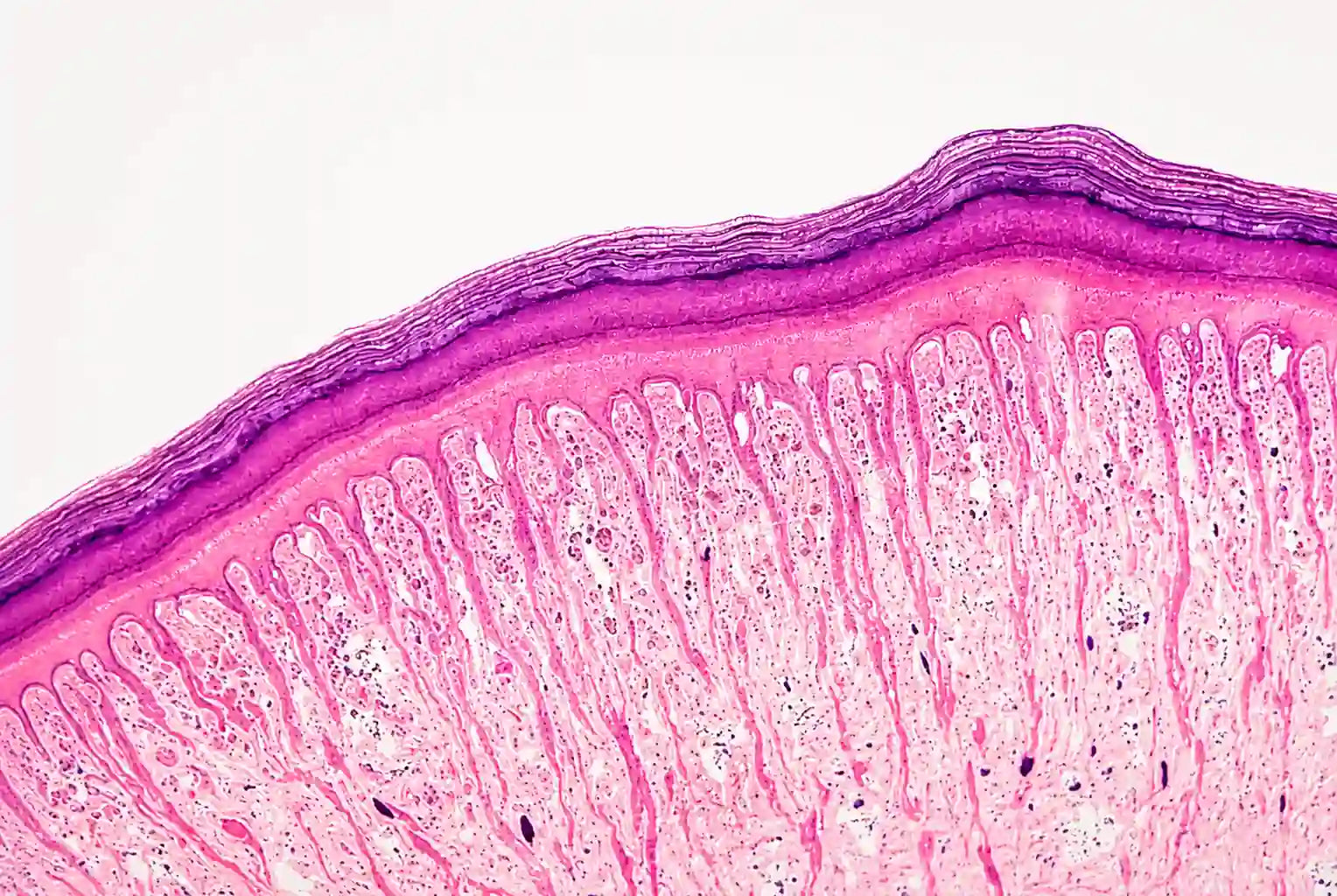
Quick Answer: What Is Skin Barrier Repair?
If your skin feels tight, irritated, flaky, red, or suddenly reactive, your skin barrier is likely compromised.
Skin barrier repair focuses on restoring the outermost layer of the skin (the stratum corneum) so it can:
-
Retain moisture
-
Block irritants and allergens
-
Support a healthy skin microbiome
The fastest way to repair a damaged skin barrier is to remove irritants, simplify your skincare routine, and choose products with skin-identical, microbiome-respecting ingredients.
What Is the Skin Barrier & Why It Matters
Your skin barrier works like a brick-and-mortar system:
-
Bricks: skin cells
-
Mortar: lipids (ceramides, cholesterol, fatty acids)
When intact, it prevents transepidermal water loss (TEWL) and protects against environmental stressors such as pollutants, UV from the sun or climate extremes (too dry, hot or humid).
When damaged, skin becomes:
-
Dehydrated yet oily
-
Easily inflamed
-
More susceptible to irritants (a major issue for sensitive skin)
Signs Your Skin Barrier Is Damaged
You may need skin barrier repair if you experience:
-
Tightness after cleansing
-
Burning or stinging when applying products
-
Redness that lingers
-
Flaking or peeling
-
Breakouts triggered by “gentle” products
-
Oily but dehydrated skin
These are classic signs of barrier + microbiome disruption, not just a ‘skin type’ issue.
What Damages the Skin Barrier (Ingredients to Avoid)
Based on Skinara® sensitive skin and microbiome research, the following ingredient categories are known to damage or disrupt the skin barrier and should be avoided at all times .
Some skincare ingredients to avoid:
1. Petrochemicals (e.g. Mineral Oil, Paraffin)
-
Act as ‘inert occlusives’ (like invisible plastic wrap on your skin), not biological repair agents
-
Trap heat and sweat, worsening eczema or acne, causing irritation and sensitive skin
-
Do not help repair the skin’s natural protective oils (lipids) or look after the healthy bacteria (microbiome) living on the skin's surface
These can create a false feeling of hydration while delaying real barrier repair.
2. Endocrine Disruptors
They’re like chemical imposters that break into your skin’s barrier and hijack its normal function and they’re found in some skincare preservatives and SPF UV filters. They can interfere with the hormonal balance in your skin:
-
Increasing inflammation and oil instability
-
There’s emerging scientific evidence of skin microbiome disruption too
Skinara® excludes these to create a clean, secure environment for barrier recovery.
3. CMR Substances (Carcinogenic, Mutagenic, Reprotoxic)
Carcinogenic: Makes cells grow like a machine that won't turn off.
Mutagenic: Scrambles the "instruction manual" of your DNA.
Reprotoxic: Breaks the system that creates or protects future healthy skin.
-
Particularly risky for barrier-impaired skin, which absorbs more of these nasties
-
There’s no margin for systemic risk during pregnancy or sensitivity cycles
Skinara® goes beyond international skincare regulations by excluding these ingredients entirely.
4. Artificial Fragrance, Colorants & Flavors
-
Trigger hypersensitivity reactions leading to sensitive skin
-
Compete with microbiome recovery
-
Increase irritation in compromised skin barriers
This is especially critical for eczema-prone and reactive, sensitive skin.
5. Sugar & Sweeteners (Ingestible / Nutricosmetics)
-
Feed inflammation-promoting microbes (‘bad bacteria’)
-
Disrupt the gut-skin axis
-
Can worsen flare-ups and redness
6. Wheat / Gluten (Sensitive Individuals)
-
Linked to systemic inflammation in susceptible users
-
Can aggravate eczema and chronic skin sensitivity
How to Repair a Damaged Skin Barrier (Step-by-Step)
Minimal skincare routine infographic
Step 1: Remove Irritants First
-
Exfoliating acids
-
Retinoids
-
Fragrance
-
Harsh cleansers
Less irritation = faster repair.
Step 2: Gentle Cleansing Only
Use skin pH neutral, non-foaming cleansers that respect lipids and your skin’s microbiome.
Step 3: Hydrate + Rebuild
Hydration reduces TEWL, while lipids rebuild structure.
-
Ceramides
-
Fatty acids
-
Cholesterol
-
Panthenol
-
Microbiome-supporting actives
Step 4: Protect Daily With Broad Spectrum SPF
UV exposure weakens barrier lipids and delays healing.
Explore the Skinara® Sun Care collection.
Best Skincare Ingredients for Skin Barrier Repair
-
Ceramides: replace lost lipids
-
Fatty acids + cholesterol: rebuild structure
-
Panthenol (B5): speeds repair
-
Squalane: lightweight moisture retention
-
Pre- & probiotics: support skin microbiome resilience
“To help repair and protect your skin barrier, simplify your skincare routine, use products with an appropriate pH, and incorporate moisturizers containing beneficial ingredients like plant oils, ceramides, hyaluronic acid, or petrolatum.”
How Long Does Skin Barrier Repair Take?
|
Damage Level |
Typical Recovery |
|
Mild |
5-7 days |
|
Moderate |
2-3 weeks |
|
Severe |
4-6+ weeks |
Remember: consistency matters more than product count.
Common Mistakes That Slow Barrier Repair
-
Restarting skincare actives too early
-
Over-cleansing and exfoliating
-
Product hopping or using too many different products
-
Ignoring daily sunscreen
-
Using occlusive fillers (skin suffocating products) instead of skin-identical lipids
FAQs - Skin Barrier Repair
Q. Can the skin barrier repair itself?
-
Yes, but supportive skincare dramatically accelerates healing.
Q. Should I exfoliate during barrier repair?
-
No. Exfoliation prolongs damage.
Q. Is “tingling” a sign of healing?
-
No. Healing skin should feel calm, not reactive. Tingling is a sign of skin sensitivity
Q. Is microbiome-friendly skincare important?
-
Yes. A balanced microbiome is essential for barrier resilience.
Final Takeaway: Repair First, Treat Later
If your skin is reactive, unpredictable, or uncomfortable - barrier repair must come first.
-
Remove irritants
-
Rebuild lipids
-
Respect the microbiome
-
Protect daily
Everything else works better after the barrier is restored.
Explore the Skinara® microbiome-smart barrier repair & protect range designed for sensitive skin and barrier-impaired skin:



Share:
Tinted Sunscreen: Your Complete Guide to Radiant, Protected Skin
TikTok Skincare Ingredients Ranked: What’s Worth the Hype?